

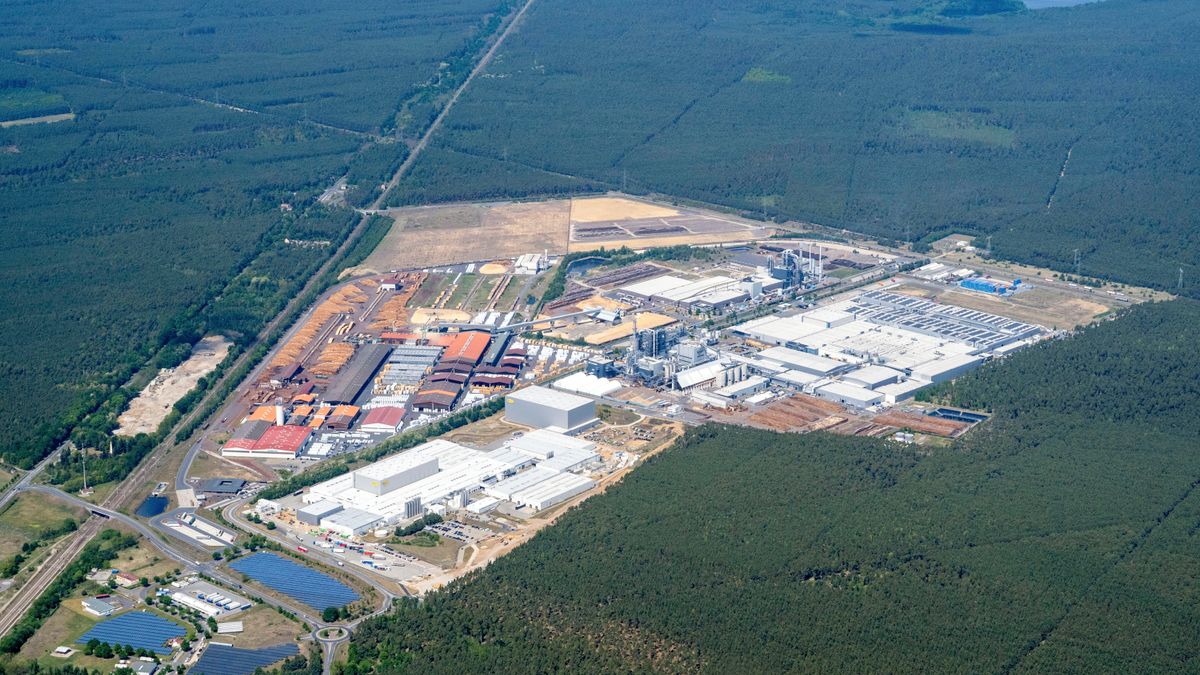
Energy drink giant Red Bull is significantly expanding its production capacity with a massive new factory project in Baruth, Brandenburg. This ambitious undertaking aims to produce an astonishing 3.3 billion cans annually, solidifying the company’s manufacturing footprint within Germany. The scale of the operation underscores Red Bull’s global demand and its strategic decision to invest heavily in the region, creating a major industrial hub in the heart of Brandenburg. This expansion is poised to have far-reaching implications, not just for the company’s supply chain but also for the local economy and community dynamics in Baruth.
The chosen site in the Baruth industrial zone offers strategic advantages for distribution across European markets. While specific investment figures for this particular plant aren’t provided in the brief, projects of this magnitude typically involve hundreds of millions, if not billions, of euros and are expected to generate a substantial number of direct and indirect jobs. Such an influx of industrial activity can revitalize local economies, attracting skilled labor and boosting regional infrastructure, from transportation networks to housing and ancillary services. The development represents a significant vote of confidence in Germany’s industrial landscape and its capabilities to support large-scale manufacturing.
However, the sheer size of the Red Bull factory project has inevitably raised concerns among the local population in Baruth. Large-scale industrial developments often bring challenges such as increased traffic volume, potential strain on local resources, particularly water and energy, and noise pollution from round-the-clock operations. Environmental impact assessments become crucial in such scenarios, with residents often worried about the preservation of local ecosystems, air quality, and the overall quality of life in their community. These anxieties highlight the delicate balance between economic development and environmental stewardship, prompting calls for transparent communication and robust mitigation strategies from both the company and local authorities.
Addressing these community concerns will be paramount for the successful integration of the Red Bull facility into the Baruth landscape. Open dialogues, comprehensive environmental planning, and investments in local infrastructure that benefit residents directly are key to fostering a positive relationship. While the economic benefits—job creation, tax revenue, and regional prestige—are undeniable, ensuring sustainable growth that respects the local environment and population is equally vital. The project stands as a case study in managing the complexities that arise when global industrial ambitions meet local community interests, requiring careful negotiation and commitment to long-term sustainable development for all stakeholders involved.

