

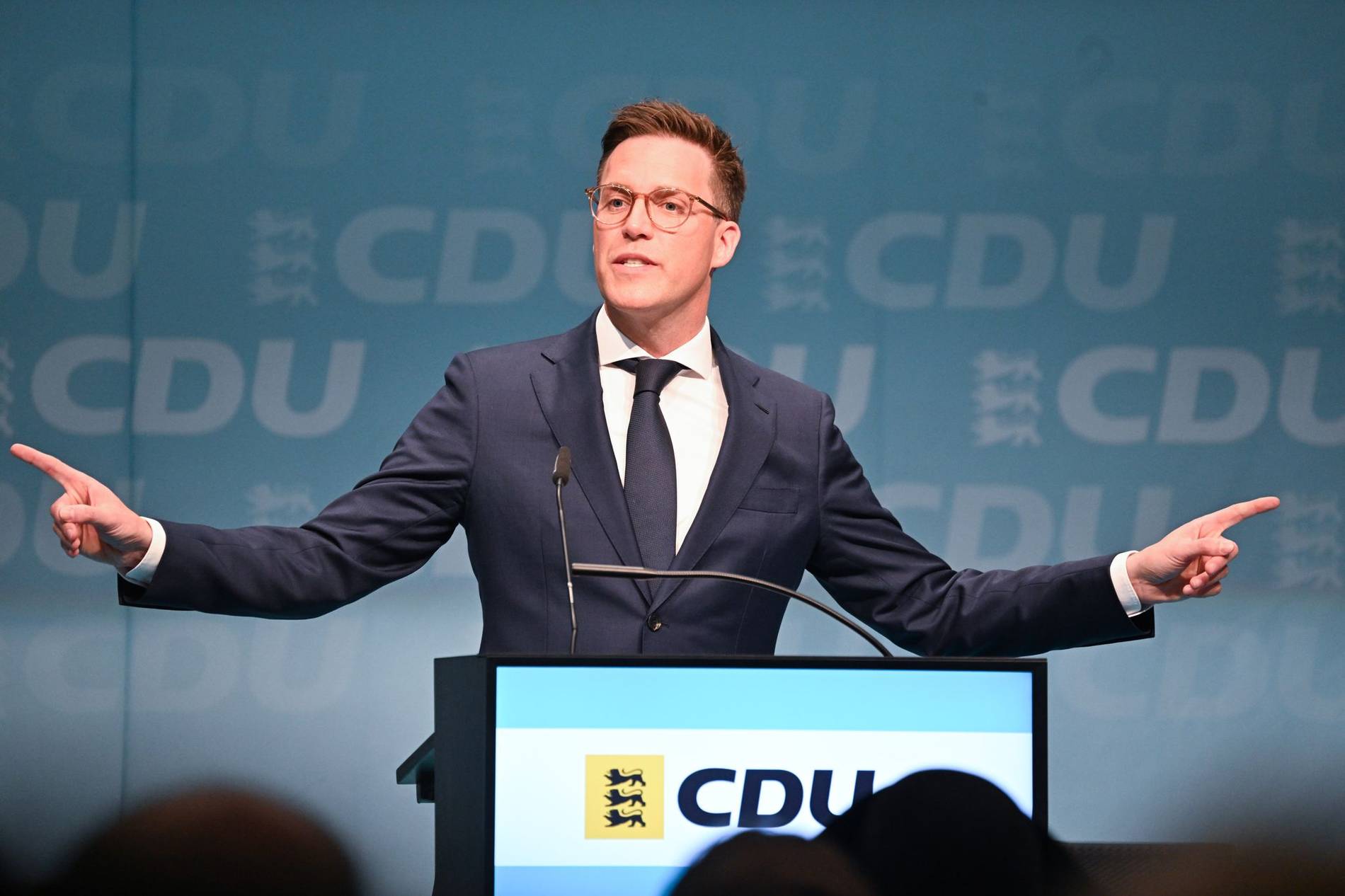
The Baden-Württemberg coalition deal has been officially approved by both the Greens and the Christian Democratic Union (CDU), paving the way for a renewed state government in southwest Germany. The agreement confirms another term of joint leadership between the two parties, which have governed together since 2016. The decision was made during party conferences held in Stuttgart and Korntal-Münchingen in the Ludwigsburg district.
The coalition will continue under the leadership of Cem Özdemir from the Greens, who is set to become the new Minister-President of the state. The Greens approved the agreement with a strong majority, with only a small number of delegates voting against it. In contrast, the CDU passed the deal through a simple hand vote, with only one abstention among its delegates.
The two parties remain closely matched in political strength. In the most recent state election on March 8, the Greens narrowly led with 30.2 percent of the vote, while the CDU followed closely with 29.7 percent. Despite this, both parties now hold an equal number of seats in the new parliament, creating an unusual political balance in the region.
CDU state leader Manuel Hagel played a key role in negotiations and will take on the position of deputy head of government and interior minister in the new cabinet. He emphasized that the coalition is based on cooperation rather than merging political identities, stating that both parties would remain distinct while working together for the state.
The coalition agreement is more than 160 pages long and sets out the policy direction for the next five years. It includes major reforms in education, climate policy, and economic development. One key measure is the introduction of a free and mandatory final year of kindergarten education. The government also aims to make company startups possible within two days, reducing bureaucracy and improving business conditions.
Climate policy remains a central focus of the agreement. The coalition has confirmed its goal for Baden-Württemberg to become climate neutral by 2040, five years earlier than the national target. The plan also includes stronger support for key technologies and efforts to modernize industrial infrastructure in the state.
Economic policy is another major pillar of the agreement. Both parties have placed strong emphasis on supporting industry in Baden-Württemberg, one of Germany’s most important manufacturing regions. The plan includes measures to promote innovation, reduce administrative barriers, and strengthen competitiveness in global markets.
Despite the agreement, not all voices within the Greens are fully supportive. The Green Youth criticized the coalition deal as lacking ambition. They argued that the agreement does not go far enough on climate action and fiscal policy. In particular, they expressed concern about reduced emphasis on sector-specific climate targets and limited use of borrowing options for public investment.
Party leaders, however, defended the agreement as a pragmatic compromise. Özdemir described the negotiations as difficult but necessary, noting that both sides had to make concessions. He highlighted the importance of a centrist political approach that focuses on solving problems rather than ideological division.
CDU leaders also emphasized a pragmatic governing style. Hagel said the coalition would focus on stability, avoiding political theatrics or unrealistic promises. He stressed that the government’s priority would be delivering practical results for citizens rather than political performance.
A notable personnel decision in the new government is the appointment of senior CDU politician Andreas Jung as education minister. His selection was seen as a surprise due to his background in climate policy at the federal level. The Greens are expected to announce their full cabinet lineup in the coming days.
The coalition agreement is set to be formally signed on Monday. Following this, the state parliament will vote on May 13 to confirm Cem Özdemir as the new Minister-President of Baden-Württemberg. The outcome is expected to officially mark the beginning of a new term for the green-black coalition in one of Germany’s most economically important states.

