

Former state leader Torsten Albig has sparked a major political debate in Germany after suggesting that the Social Democratic Party (SPD) should consider limited cooperation with the Alternative for Germany (AfD). His comments have triggered strong reactions across the political spectrum and reopened discussions about Germany’s so-called “firewall” policy against the far-right party.
Albig, who served as Minister-President of Schleswig-Holstein until 2017, made his remarks in an interview with the Neue Osnabrücker Zeitung. He argued that the SPD should not completely rule out minority governments that rely on issue-based support, even if it comes from AfD-tolerated votes. He said that in some cases, cooperation on specific topics could help win back voters who have shifted to the AfD.
In his comments, Albig pointed to political models in other European countries, including Denmark. He suggested that early engagement with right-wing populist parties on selected issues had, in some cases, helped mainstream parties regain voter trust. According to him, refusing all forms of cooperation may push more voters away instead of bringing them back.
Albig’s remarks come at a time of growing political pressure on Germany’s major parties. Recent polls show the AfD gaining strong support nationwide, with some surveys placing it as high as 29 percent. At the same time, both the SPD and the Christian Democrats are facing declining approval ratings. In several eastern German states, where elections are approaching, the AfD is now leading in some polls. This has raised concerns about future coalition building.
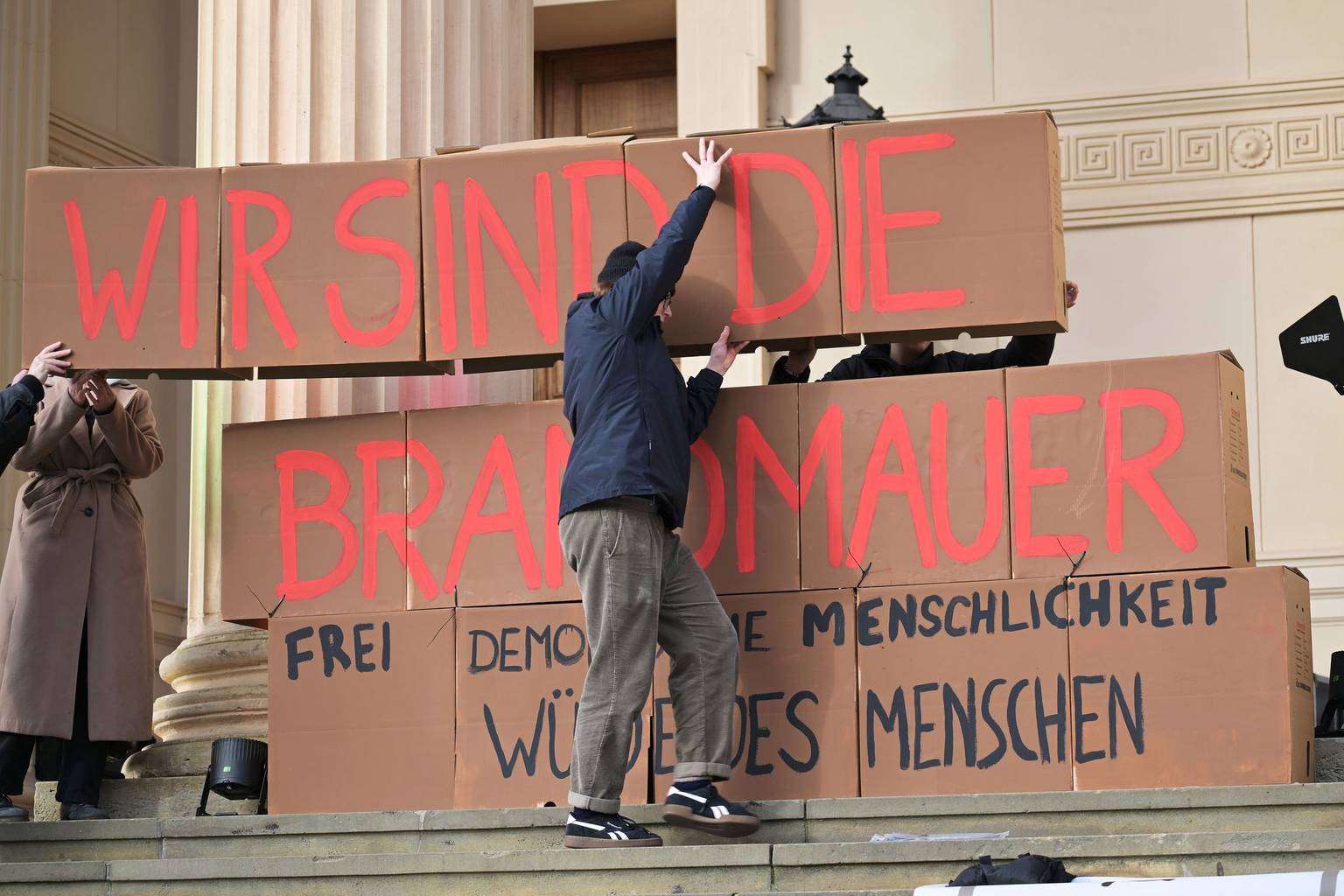
The debate also centers on Germany’s long-standing “Brandmauer” or firewall policy, which rejects any form of cooperation with the AfD. Albig questioned whether this approach still reflects political reality. He argued that behind this “wall” are former voters of mainstream parties who feel ignored. He said political leaders must better understand why these voters are turning away.
He stressed that his idea is not about forming direct coalitions with extremist forces. Instead, he suggested allowing minority governments to operate while seeking issue-based support where necessary. He admitted such arrangements would be more difficult than traditional coalitions but argued that Germany’s current political fragmentation may leave few other options.
Albig also warned that excluding large voter groups could deepen political alienation. He said many former SPD and Christian Democratic voters now support the AfD because they feel their concerns are not being addressed. According to him, political parties must listen more closely to these concerns rather than dismissing voters outright.
However, his proposal was quickly rejected by leading SPD figures. Ulf Kämpfer, SPD state leader in Schleswig-Holstein, said Albig had “completely gone off track.” He insisted that there can be no cooperation with the AfD under any circumstances.
Berlin SPD leader Steffen Krach also rejected the idea, stating that there is “zero common ground” between the SPD and the AfD. He emphasized that the party stands in direct opposition to SPD values and traditions.
Similarly, SPD parliamentary leader Jochen Ott described Albig’s proposal as “completely wrong and damaging.” He said cooperation with the AfD would never be acceptable for Social Democrats, pointing to Germany’s historical responsibility to reject extremist politics.
Despite the backlash from the SPD, Albig’s comments received support from some political actors outside the party. Sahra Wagenknecht of the BSW criticized the firewall strategy, calling it undemocratic to exclude a large share of voters. The AfD itself also welcomed the debate, arguing that voter pressure will eventually force mainstream parties to change their stance.
The discussion highlights growing tensions in German politics as traditional parties struggle with shifting voter behavior. While mainstream parties continue to uphold the firewall against the AfD, internal debates like this suggest that questions about strategy and voter outreach are becoming increasingly urgent ahead of upcoming elections.

